Following a fiscal fourth quarter that “did not play out as anticipated,” the chairman and CEO of Distribution Solutions Group joined a group of analysts for the company’s quarterly earnings call on March 5.
On the call, Bryan King outlined the array of challenges faced by the company during the year, including macroeconomic headwinds, shifting pricing and supply chain dynamics, and “numerous one-time cost curveballs.” He said that the year also featured “reinvestment, retooling and digesting” on the part of the company, and that officials made the decision to “prioritize not delaying targeted significant investments in capabilities and talent to position the company for long-term success.”
The company, he added, began the new year with “an enhanced perspective on our competitive positioning and long-term levers to drive performance.”
“We are not where we want to be at the end of the quarter,” he told analysts, “but our confidence and vision for the future remains strong.”
That vision, however, would soon include stark changes to how the company would operate — and likely meant that the early March earnings call would be DSG’s last.
Just over a week later, DSG disclosed an offer from its top shareholder – also led by King – to buy out its other investors and take the business private.
Its subsequent quarterly reports, citing the buyout offer, did not hold calls with analysts at all, and, in short order, Distribution Solutions Group may join the growing ranks of distributors that are under the umbrellas of private equity firms.
Building a Billion-Dollar Distributor
In 2012, Luther King Capital Management – a Fort Worth investment advisory firm established over 30 years earlier – formed LKCM Headwater Investments, a private equity affiliate that, it says, aims to partner with management teams to build “stronger, more enduring and highly successful companies.”
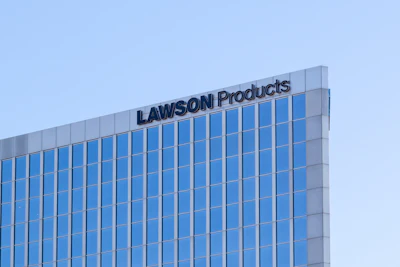
Bryan King had joined Luther King Capital Management in 1994 and now serves as the managing partner of LKCM Headwater, whose portfolio has included numerous investments in the distribution sector, including Relevant Solutions, LGG Industrial and Lawson Products, a Chicago-based MRO distributor dating back to 1952.
By the beginning of 2022, affiliates of LKCM Headwater owned about 48% of the shares in Lawson; early that year, Lawson, with King now as its chairman, announced plans to merge with fellow LKCM Headwater companies Gexpro Services and TestEquity. The combined business was subsequently renamed Distribution Solutions Group, and the deal raised LKCM’s stake to 75%; by the time of its March take-private offer, it held a roughly 79% stake.
DSG remained active on the M&A front in subsequent years – adding Hisco, Source Atlantic, Emergent Safety Supply and Eastern Valve & Control Specialties, among other companies – but its financial results over that span were decidedly mixed, including an annual loss in 2024 before its lower-than-expected 2025.
King said on the March call that company leaders were working to build “a more valuable enterprise” that “consistently generates cash flow and long-term shareholder value,” but in his capacity with LKCM Headwater, he would soon raise questions about whether it could best do that as a publicly traded enterprise.
A Company ‘Significantly Constrained’
King’s March 14 letter to his fellow DSG board members described a company whose efforts to capitalize on “value creation opportunities” had been “significantly constrained by the pressures, inflexibility and short-term focus and expectations inherent in operating the company as a public company.”
He further outlined a potential privately held company whose management would not be distracted by regulatory filings and other obligations — and who could instead implement strategic initiatives “without the scrutiny of quarterly earnings cycles, analyst estimates and shorter-term marketplace expectations.” Examples, he wrote, could include harmonizing “multiple” ERP systems, optimizing sales and market expansion efforts, and executing both “organic and inorganic growth strategies.”
A special committee formed by DSG to evaluate the proposal unanimously approved an agreement for LKCM to pay $35 per share to acquire the business outright — above an original proposal of $29.50 per share that would have valued the company at over $2 billion. The deal is set to be completed after a series of closing conditions, including approval by a majority of non-LKCM-affiliated shareholders and a waiting period required under federal law; as of press time, it remains pending.
The go-private agreement, however, hasn’t stopped DSG from continuing its inorganic growth activities: the company in September announced its acquisition of American Fasteners Corp., a Miami MRO distributor with three locations and business spanning South Florida and into the Latin American and Caribbean markets — part of company efforts, King said in a statement, to “build scale in MRO.”
This column originally appeared in the September/October issue of Industrial Distribution magazine. Subscribe here and sign up for ID’s Today in Industrial Distribution daily newsletter here.