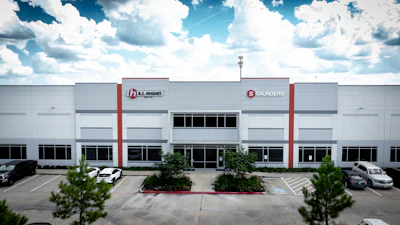
R.S. Hughes would be considered, by most measures, to be one of the distribution industry’s major players.
The company, after all, has a legacy spanning seven decades, a coast-to-coast and international footprint, a wide range of products and end markets, and annual revenues in excess of half a billion dollars.
But despite its scope and sales numbers, company officials, in many ways, still view the business as something of a specialty distributor — one that differentiates itself with technical knowhow and service capabilities rather than sheer size.
Don’t mistake that perception, however, for a lack of ambition: under a new top executive, the Bay Area-based distributor says it’s preparing to add a new kind of scale to its business — and that it’s committed to doing so without compromising the things that have sustained it for so long.
“Where we were last year was really in the midst of setting a clear foundation, and getting ourselves ready for a year of substantial growth,” said John Mathis, who was named the company’s president last year.
“We’ve been working toward this for many, many years, and it’s something that we feel like we’re ready to capture as we continue to move onto this next stage of our journey.”
A Specialty Adhesives Distributor
R.S. Hughes is headquartered in Sunnyvale, California – known more today as the heart of Silicon Valley than as a manufacturing hub – but it traces its roots to a Los Angeles-area “hole-in-the-wall” in the mid-1950s.
Robert Saunders Hughes, an engineer by trade who had worked at Colgate-Palmolive, partnered with Ledge Hale to start his namesake company in Glendale, California, in 1954. The business, originally a manufacturer and stocking representative, evolved into an independent distributor – primarily of plastics – as Hughes also established Saunders, a manufacturing services division, in 1959.
 R.S. Hughes locations in the U.S., Mexico and Costa Rica. R.S. Hughes
All of that growth, with the exception of a single “minor” M&A deal in the East, has also been organic — launching new operations to meet the needs of its customers in those areas.
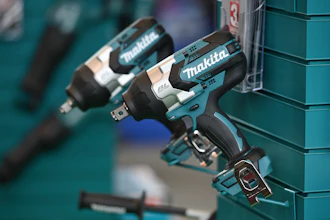
The company’s portfolio has grown along with its footprint – today, it includes everything from tools and jan-san supplies to electronic components and safety gear – but Mathis said that the company, at its core, remains “a specialist distributor of adhesives, tapes and advanced materials across North America.”
That role, however, provided a platform for R.S. Hughes to capitalize on the evolving needs of the industries it serves.
“Really, what R.S. Hughes built their business on is adhesives,” said Vice President of Sales Nate Freese, “so we want to be the best at adhesives, and then, [at] solving complex challenges for our customers on the adhesive end.”
That, in turn, helped make R.S. Hughes a partner to its customers, rather than simply a supplier — at a time when the rest of the distribution industry is racing to offer those kinds of services.
“[We’re] helping them specifically address a problem or an opportunity or a challenge,” Freese said, “and then being able to build out a comprehensive program around that — that includes engineered solutions [and] integrated supply — we really want to be the best at that.”
‘Unique Ways’ of Creating Value
Mathis is relatively new to the president’s chair, but his view of the company and its relationship to its customers dates back over 12 years to a sales role in the company’s Los Angeles division. He eventually would lead “pretty much every one of our commercial organizations,” ultimately becoming chief revenue officer before he was tapped to succeed the retiring Bill Matthews last spring.
 R.S. Hughes leaders, including President John Mathis (center), walk the floor at Saunders by R.S. Hughes.R.S. Hughes
“We’re looking at unique ways to embed ourselves in their operations in order to continue to create that value.”
That means that the model of growth that R.S. Hughes utilized in the past – the addition of brick-and-mortar locations – isn’t necessarily the one it will use moving forward. Mathis said that the company is focused on a “center of excellence” model: distribution centers that serve as hubs for both local inventory and value-added services.
“We have a really strong strategy to make sure that we offer both of those,” Mathis said.
The company’s investments in technology, Hughes officials said, would be critical to putting that strategy into place.
Vice President of Marketing Jessica Sardina said that Hughes has invested in its ERP capabilities to get “a holistic picture” of its customers, suppliers and products across its locations, as well as its CRM and other customer-facing systems to build a “seamless journey” for them.
Freese, meanwhile, added that better technology can help the company’s commercial organization “be more intelligent about where they’re spending their time.”
“We want to deliver a better customer experience, and the investments that we’ve made, and are going to continue to make, in technology are all oriented around that,” Freese said.
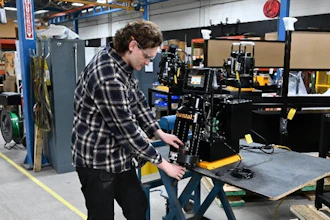
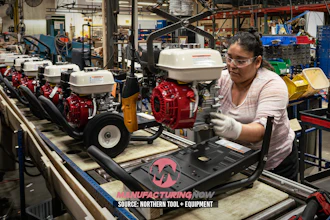
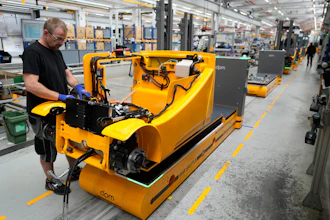
The company also highlighted the significance of Saunders by R.S. Hughes as “a really important part” of its value proposition. The distributor’s converting arm, which offers die-cutting, laminating, slitting, packaging, assembly and other manufacturing services, operates a facility in Southern California and another in suburban Houston — the latter of which was relocated from the Chicago area last year.
“It’s a part of the overall bag, or offering, that our distribution sales reps are able to present — the same way that they are [presenting] a VMI program, the same way that they are a 3M adhesive,” Freese said.
“That part of our business continues to grow, and we’ve got some exciting expansion plans for them in the future, too.”
A ‘Powerful’ Differentiator
Like many distributors, the leaders at R.S. Hughes say that the challenge of adding scale isn’t just generating new business — it’s growing while retaining the local presence and commitment to service that helped it expand in the first place.
Hughes officials, however, believe that it has a unique advantage when it comes to preserving those priorities: the distributor is marking its 50th anniversary as an employee-owned company this year and, Mathis noted, became 100% employee-owned in recent years.
He called it “a huge driver of our business.”
“All of us as leaders at R.S. Hughes are really working with our teams to make sure that every individual understands that impact, and they can see it,” Sardina said. “They can see it on their check. They can see it in our overall company growth. They can see that in the reinvestment that we’re able to do, and have a little bit less fear.
“We’re in a space that is heavily owned and dominated and targeted by private equity, and we have a lot less worry about that. We can really focus on long-term growth, not just the short term.”
Freese said that the company’s ESOP structure was an important part of his decision to join the business in the first place, and that across its workforce, “whenever people have a vested interest in the business, they’re going to do a better job for their customer.”
“We do quarterly board meetings at R.S. Hughes … but in those quarterly board meetings, we’re not really interested in making financial decisions about what’s going to look a little bit better three months from now,” Freese said. “We are truly thinking, investing and building for the long term, and being fully employee-owned gives us that flexibility.”
This article originally appeared in the September/October issue of Industrial Distribution magazine. Subscribe here and sign up for ID’s Today in Industrial Distribution daily newsletter here.