For hose distributors, hose assembly shops and hose service operators, a proper crimp is one of the most important elements of a reliable hose assembly. It helps ensure the hose, coupling and complete assembly perform as intended. A hose assembly can use the highest-quality hose and fitting available, but those components won’t perform properly if they aren’t crimped correctly.
When the crimping process relies too heavily on manual measurements, outdated specifications or inconsistent techniques, it can result in unnecessary risk, rework and downtime. But when done right, a proper crimp can increase reliability and uptime, help keep workers safe and reduce costs.
Before digital crimping technology was available and hose fittings were crimped manually, the resulting assembly depended heavily on the operator’s experience, knowledge and skill. Process repeatability and traceability were nearly nonexistent. A digital system can reduce errors caused by manually locating, interpreting and entering crimp specifications.
Today, crimping technology can be nearly as easy to use as a smartphone. It increases operator safety, reduces training times and simplifies the task of tracking metrics, making it easier for businesses to keep operations running smoothly. The goal is to give technicians clearer information, more confidence and fewer opportunities for manual errors. There are many benefits of a smart crimper, including positively impacting the bottom line.
Technology increases repeatability
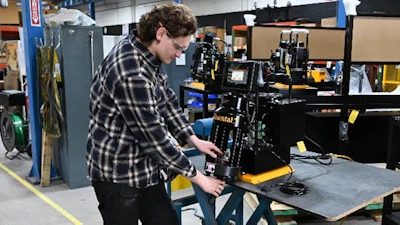
Digital crimping machines help technicians make a proper crimp every time using only a few selections on the machine’s interface. These interfaces guide operators through the process, helping those with varying levels of experience produce consistent assemblies. Distributors and operators alike want the process to be easy, successful and repeatable so that team members of all experience levels can make a proper crimp.
For example, ContiTech’s PC125i crimper uses a three-tap-to-crimp process, making it easier for technicians to produce consistent connections. The machine includes technology designed particularly for service operations that may still rely on manually adjusted analog equipment. The operator matches the hose layline and size information, and the interface identifies the appropriate die and prompts the technician to verify the selection before completing the crimp.
Digital crimping technology also makes it easy to train new employees quickly, which can help overcome the challenges of recruiting and retaining experienced technicians. No matter who is operating the crimping machine, digital technology guides the user through the process from start to finish. Operators do not have to rely on institutional knowledge because the machine provides a step-by-step guide. This guidance can give technicians greater confidence while reducing some of the pressure associated with producing a safe, accurate assembly. Digital crimpers can greatly reduce the risk of human error and increase accuracy and consistency.
This operator-first approach is intended to bridge the knowledge gap by helping new technicians learn the process quickly, while giving experienced technicians a more efficient and consistent workflow.
Digital crimpers improve traceability
Digital crimpers can record production data making traceability easier. This information can be useful for businesses looking to monitor assembly output, evaluate performance and maintain production records. Managers can use production data to see how many crimps a technician completed during a given period and better understand productivity, training needs and overall shop performance.
ContiTech has a hose-labeling technology, called CrimpCloud, which simplifies after-sales service, supports product authentication and enables assembly fabricator branding. QR code-based digital connectivity allows technicians to identify assemblies and find replacements more quickly by providing clear, durable identification throughout the product life cycle.
Safety first
In addition to making it easier for technicians, digital crimping also increases safety. If a hose assembly fails, the results can be life-threatening. Because digital crimping reduces the amount of manual data entry and guesswork involved in the task, it can help technicians avoid errors that may lead to unsafe assemblies. A properly configured digital crimper follows the same specifications for each assembly, rather than relying on an operator to manually enter multiple settings. The technician, however, is still essential to the crimping process. The technician needs to ensure the correct components are being used, make the appropriate selections on the machine and verify the crimp. The crimp diameter should still be checked with a caliper to confirm that the assembly meets the required specification.
If mistakes are made during the crimping process, the fitting can separate from the hose, potentially causing a catastrophic failure or serious injury. A failed connection can result in fluid leaks, high-pressure fluid-injection injuries, burns or injuries caused by a whipping hose. An improper crimp can also cause downtime and operating losses, making first-time accuracy essential to both safety and profitability.
Two of the most important ways to help prevent crimping failures are ensuring the hose is fully inserted into the coupling and verifying that the correct crimp specifications and components are used. Digital technology supports the operator, but it does not replace hands-on checks to confirm the crimp was done correctly. Sending employees home safely at the end of every day is one of the most compelling reasons to ensure correct connections.
Reducing costs
While safety is perhaps the single most important reason to make the move to digital crimpers, the impact on the bottom line is another compelling factor. Digital crimping can help reduce waste caused by selecting the wrong fitting and hose combination. Because of its ease of use, it also saves time and money that might be spent on additional operator training, rework or correcting preventable errors.
While more manual processes may come with lower upfront costs, making the investment in digital crimping technology delivers substantial short- and long-term gains. From improved safety, to ease of use and repeatability, to overall reduced costs and benefit to the bottom line, those who are looking to the future of crimping are looking to digital crimpers.
Chad Peters is a product manager for equipment & hydraulic fittings, fluid handling solutions, industrial solutions, Americas at Continental’s group sector ContiTech. He has been with Continental for 18 years in sales, plant management and product management.