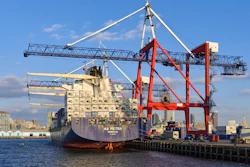
The long-rumbling closure of the Strait of Hormuz, one of the world’s busiest oil shipping channels, is being called "the largest supply disruption in the history of the global oil market," according to the head of the International Energy Agency, Fatih Birol, but as chokepoints around the world on land, sea, and air grow in their effect, it’s anyone’s guess for how long!
More than oil supply is at stake in the current spotlight on the Strait of Hormuz. According to the United Nations, around a third of the world's fertilizers pass through the Hormuz Strait and this disruption couldn’t come at a more critical time for agricultural production.
Then there’s helium, a critical yet often overlooked resource. The U.S. Geological Survey estimates that a third of the world’s helium supply is produced in Qatar and passes through the Strait of Hormuz. As a byproduct of natural gas, helium plays a crucial role in semiconductor manufacturing and a prolonged shortage would force microchip production cuts, impacting computers, smartphones, vehicles, and crucially MRI scanners.
The New Disruption Reality
Remember the Panama and Suez Canal crises that brought global trade to a standstill only a few years ago? The stark reality is supply chain disruptions on land, sea, and air are now a regular occurrence that organizations large and small must navigate.
Because of course it’s not just the maritime industry affected. Chokepoints are everywhere. Once one becomes blocked, others emerge. There are flight corridors such as the Gulf Skies (Persian Gulf), and the narrow Armenia/Azerbaijan Corridor, which handle major traffic between Europe, Asia, and the Gulf that can suddenly become huge chokepoints.
On land let’s not forget major airport hubs such as Hong Kong and Dubai that are also becoming bottlenecks when capacity is restricted by weather and logistical issues, let alone geopolitical disruptions. Sprinkle in the massive impact caused by the global tariff wars that started in April 2025, and one can agree that the list can, and will, go on.
‘What-If’ Insights Can Help Avoid Further Disruption
These supply chain chokepoints serve as a powerful reminder that the greater risk for organizations is inaction…but inaction is the only option if they don’t have the supply data to take action.
Businesses that fail to adapt will find themselves structurally exposed to the next shock before they have managed to even partially recover from the previous one.
Overnight, batch-based processing and planning simply won’t cut it. It will not give businesses the intelligent insights to see the impact of individual containers on the ship changing their delivery date, their sales projections, their cash flow – or how these changes ripple up or down the supply chain.
Organizations must have real-time, fully integrated, and digitized supply chains to re-route resources and manage costs the moment data shifts. Everything from enterprise resource planning, transport management, warehousing, logistics, and finance must be summoned to action, answer, and analyze what-if questions, and this relies on access to business-critical data sources.
Today’s crises remind us only too clearly that we live in an event-driven world, and only an event-driven platform has got what it takes to deal with such predicaments and make sense of an abundance of data.
Enter real-time data movement, built on an event-driven platform that removes data siloes and ensures up-to-date data is consistently available across an organization’s systems, making it easier for decision makers to have immediate access to the data where and when they need it.
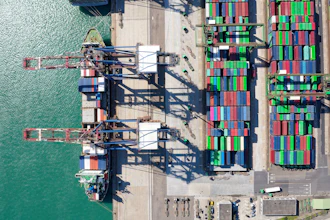
Take the instance of a single container ship loaded with thousands of products. With a siloed approach to data streaming, organizations cannot gain a holistic understanding of the ripple effect across their supply chain. Advanced event broker technology plays a key role here in preventing issues caused by unexpected changes in supply or demand.
AI agents take this one step further. With a real-time data movement capability combined with agentic AI, an AI agent can view in real-time each container on every ship, see the distribution of a global supply chain such as stock availability in other regions, and model alternative scenarios to fulfill orders via other viable routes or delivery mechanisms with minimal human involvement.
The Missing Ingredient
This ability to effectively automate re-routing and re-planning “on the fly” is ultimately the missing ingredient to fulfilling customer expectations for existing orders and mitigating longer-term supply issues.
With a real-time data movement capability combined with agentic AI, organizations can capitalize on up-to-date data to make meaningful business decisions and react much faster to dynamic market conditions.
There is huge business potential in using advanced event-driven technology to prevent business processes being bottlenecked and dealing with disrupted flows of physical goods and the data behind it. A powerful agent mesh dynamically distributes events to AI agents – regardless of application type or capacity of location – to enable decisions to be made “on the fly” to best meet order fulfilment and avoid the damaging impact on consumer-facing operations.
With agentic AI combined with real-time data movement, businesses can limit the effect of global supply chain chokepoints wherever they are and leap ahead of their competitors with real-time actionable insights.
Prepare today …and pre-empt future disruptions.