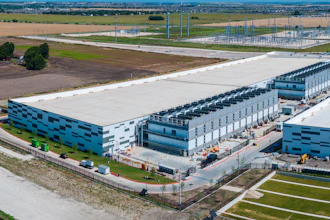
As industrial distributors and supply chain partners navigate ongoing volatility, many are re-evaluating how their networks are structured to balance inventory, cost and responsiveness. Supply Technologies recently announced plans to establish a new distribution hub in Southwest Ohio that would significantly expand its North American distribution network. The company – a global supply chain management business for assembly components and fasteners – will spend more than $20 million on the flagship location. It will incorporate leading edge technologies designed to reduce redundancy, enable automation at scale and leverage data across its network. The new facility will also add 60 jobs in the area. ID spoke with Brian Norris, president of Supply Technologies, to learn more about how the company’s new centralized distribution center will benefit its customers in the future.
Industrial Distribution: Let’s talk a little bit about Supply Technologies as a company, including your product lines and how you go to market.
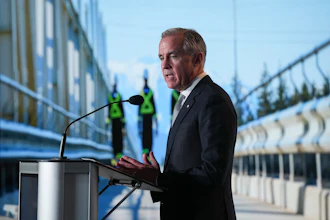
 Supply Technologies President Brian NorrisSupply Technologies
ID: You recently revealed a new Ohio distribution hub, saying it would “significantly expand North American distribution.” Tell us a little bit more about that.
BN: When I entered this business four years ago, one thing I realized was the business was run on more of a spoke model, not a hub-and-spoke business. The company has experienced double-digit growth over the past four years. This prompted a closer look at our network efficiency. We hired a firm about two years ago to take a look at the movement of goods. An analysis of product flows showed significant overlap across locations, creating an opportunity to improve efficiency through centralization in North America. This facility in Ohio will then feed our local branch facilities that cater to that local manufacturer across the country.
So it truly is going to be a hub-and-spoke system. Our warehouses close to our customers will look a little bit different moving forward. We don’t need 80,000-square-foot facilities close to the customer to manage 120 days’ worth of supply. Now, we will manage that in our 375,000-square-foot North American distribution center and get greater economies of scale.
In North America alone, we have 46 locations. Trying to manage automated equipment in each one of those requires significant capital equipment. Centralization also supports broader automation efforts. Deploying advanced systems across dozens of locations is costly; concentrating on those capabilities in a single hub improves utilization and return on investment.
ID: Tell us a little bit more about the technology investments. Why is that a priority?
BN: Over the past 30 years, we spent a lot of capital acquiring companies, and I think it was the right thing to do, but we may have not taken a look at our infrastructure as well and invested in technology. We were a company that threw people at problems instead of considering integrating new technology to help solve the problems. Therefore, we are changing out our ERP system and moving from a very old and antiquated ERP system into SAP 4HANA. This will be one standardized global ERP system. Every one of our locations will then have the newest technology. Warehouse processes are also being modernized, with a shift from paper-based ticket-picking to digital tools, including scanning and voice-directed systems.
So that’s one piece of the story — our technology investments. We’ve also invested heavily in cybersecurity. We had an incident a few years back that brought us to our knees, and so we’ve spent about a million dollars partnering with our network and making sure that we have the right recovery processes in place to get up and running in case of any data breach in the future. We also invested in some AI technology to help us stop some of the phishing emails that came into our system. We have learned from that experience and have done a much better job to remain proactive with regards to cyber technology.
 Supply Technologies
ID: What other priorities does Supply Technologies have in 2026 and beyond?
BN: Global expansion remains a focus. We’ve recently expanded in Ireland and are adding capacity there. Additional investments are underway in Singapore and Vietnam, along with a significant expansion in Mexico. Growth in data-center infrastructure – particularly in switchgear applications – is also contributing to increased demand in several regions.
ID: You mentioned providing your customers with some actionable data. Is there anything else that your customers are telling you that they need right now that’s different from what they expected in the past?
BN: I see an increasing demand for real-time visibility and more advanced replenishment capabilities. While many VMI programs still rely on traditional Kanban systems, customers are looking for more data-driven approaches. We need to ensure we have smarter technology to trigger automated replenishment and insights to provide our customers. And so that is a piece that we’re focused on right now and finding the right [businesses] to partner with as we integrate smarter VMI technologies.
Most of our parts and pieces don’t go in vending machines. They are usually on a one-bin or two-bin Kanban system at customer sites. And so being able to have better technology replenishment reporting around that for our customers, we do a lot of that already. That’s where Vista comes in; I can tell the customer what bins are moving, what parts are moving faster or slower than they should be, which allows us to change out the size of bins for the customer on the line. But they want real time data, and automatic replenishment bins help with this.
ID: Is there anything else that you want to add that you think is really important about telling the story of Supply Technologies and the evolution of the company?
BN: Going back to the [Ohio distribution hub], not only are we putting automated equipment to move around the facility using robotics, but we are also adding high-end kitting capabilities, because we do a lot of that for our customers. Some of it we outsource and some of it we do with manual labor, but we see that as a big opportunity with manufacturers as they continually look for sequencing and other kitting capabilities on the line so that people have the material they need for that spot of the assembly process. We help optimize production lead times and evaluate manufacturing processes. So I think that is an added offering that we didn’t really have in our network and we’re spending a couple million dollars on equipment to enable these efficiencies.
As we talk about technology, I would be remiss to not talk about AI because there is a lot that we’re doing right now. We built a bunch of use cases and are talking to a lot of people in the AI world and consultants out there. We’re exploring targeted applications of AI, particularly in process automation. Initial use cases include automating order entry from email into internal systems. Things like sales orders that come through email, automatically taking that out of an email and putting that into our automated system. We are prioritizing high-impact, repeatable tasks as an initial step in our AI adoption.
This article originally appeared in the May/June issue of Industrial Distribution magazine. Sign up here to subscribe to ID’s Today in Industrial Distribution daily newsletter.