TORONTO (AP) — The United States sharply escalated its trade war with Canada on Tuesday, banning some Canadian dairy products and motorcycles as well as most alcoholic beverages after retaliatory Canadian tariffs took effect on about $20 billion in U.S. goods.
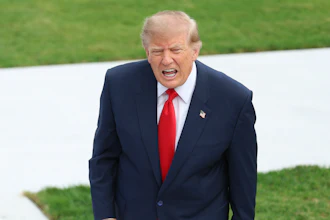
U.S. President Donald Trump also moved to shut Canadian products out of large, long-term U.S. government contracts, broadening the confrontation beyond tariffs as relations between the longtime allies deteriorate further.
The outcome could resonate far beyond Canada, showing other governments whether a smaller U.S. ally can withstand Trump's economic pressure.
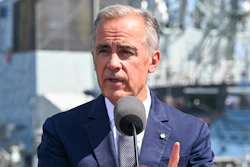
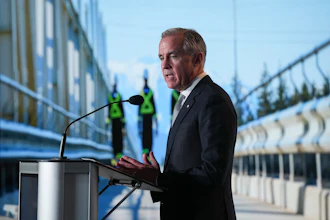
Canadian Prime Minister Mark Carney says U.S. demands could hollow out key Canadian industries and limit the country's independence, while Trump's threats to Canadian sovereignty have rallied the public behind him.
"Carney and Canada have become symbolic of resistance to him," Canadian historian Robert Bothwell said. "And what he'll want to do is make an example of Carney and Canada and theoretically terrify everybody else while in fact showing them that they need to remove themselves even further from the United States."
The latest U.S. bans take effect Sept. 29 and cover various Canadian wines and spirits, some motorcycles and mopeds, dairy products including whey, and some types of molasses.
Here's what to know.
Canada retaliates with tariffs on hundreds of US products
Canada says its tariffs match Washington's dollar for dollar and rate for rate. They took effect at 12:01 a.m. Tuesday and cover about $20 billion in American goods, roughly 6% of the $333.6 billion the United States exported to Canada last year.
The tariffs hit hundreds of American products, including steel, aluminum, cheese, appliances, clothing, cosmetics and farm equipment, at rates of 15%, 25% or 50%.
Canada has already gone beyond tariffs in other ways. Eight of its 10 provinces continue to restrict or ban sales of U.S. alcohol. The Distilled Spirits Council says U.S. spirits exports to Canada fell more than 70% year over year after those restrictions took effect.
Trump responds with import bans and government-contract restrictions
The White House responded Tuesday by announcing outright bans on some Canadian products rather than simply imposing higher tariffs. The restrictions on Canadian alcohol, dairy products and motorcycles take effect Sept. 29.
Some Canadian provinces' restrictions on U.S. alcohol prompted the U.S. ban on various Canadian wines and spirits.
Trump also directed the U.S. General Services Administration to declare Canadian products ineligible for large, long-term federal contracts until Canada allows what he called "full and fair reciprocity" for American products.
Since Canada-U.S. trade talks collapsed Aug. 21, Trump and his administration have unleashed a barrage of tariffs, threats and personal attacks portraying Canada as weak and dependent.
Trump previously warned that Canada's economy could collapse if Carney continued treating him as "the enemy."
Trump even renamed Lake Ontario "Lake America," a change ignored and ridiculed in Canada. Google and Apple bent to Trump's pressure and changed their maps for U.S. users.
"After renaming a gulf and a lake, maybe the next step for him is to rename a river?" said Daniel Béland, a political scientist at McGill University.
Trump's pressure is hardening resistance in Canada
Trump's trade war and repeated talk of making Canada the 51st state have fueled anger and rallied support for Carney. Canadians have sharply cut travel to the United States and boycotted U.S. goods.
The current trade war began after Trump returned to office and imposed a series of tariffs on Canadian goods despite having negotiated and repeatedly praised the North American trade agreement during his first term. Many of those tariffs violate the pact.
The rupture is especially striking because the countries have long shared one of the world's closest relationships, with deeply integrated economies, close defense and security cooperation, vast cultural ties and, before relations deteriorated, about 400,000 people crossing the border each day.
Carney said Tuesday that Canada's response is increasingly about reducing its dependence on the United States rather than simply weathering the latest tariffs.
"It's about ensuring that no country can hold us hostage. And that we can live how we want to live," he said.
Carney has said talks can resume when the Americans "stop doing memes, stop throwing shade, stop trying to be tough" and become serious.
So far, Trump's pressure has backfired in Canada, strengthening support for Carney rather than forcing concessions.
Carney is becoming a global voice for standing up to Trump
At the World Economic Forum in Davos in January, Carney warned that great powers are using economic integration to coerce smaller countries. The speech helped establish him as the leading voice among countries looking for ways to resist Trump.
Trump responded a day later by saying Canada "lives because of the United States" and warning: "Mark, remember that next time you make your statements."
Carney will address the European Parliament next week as Canada explores deeper ties with the European Union that could stop just short of membership.
"The Canadian public is behind the Carney government and the world is watching what will happen next," said Béland, the McGill political scientist. If Canada's defiant approach succeeds, he said, it "could be used as a template" for resisting the Trump administration's trade policies.
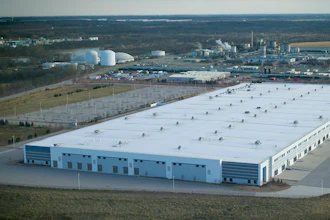
The fight is also about whether Canada keeps its factories
Trump has also threatened 50% tariffs on Canadian vehicles, auto parts and steel next year if Canada does not "fall in line," a potentially devastating escalation for industries built around deeply integrated North American supply chains.
A 50% auto tariff could hammer Canadian plants and raise vehicle prices across North America because parts and finished vehicles cross the border repeatedly during production.
Carney says Washington's terms could leave Canadian industries "gradually wound down in Canada and wiped out."
Could Canada actually win?
Canada starts at a disadvantage: The U.S. economy is roughly 13 times larger, and Canada sends more than 70% of its exports south of the border.
But Béland said this is not a normal trade fight. He pointed to Trump's domestic unpopularity, the approaching midterms and court challenges that could undo more U.S. tariffs.
"Under normal conditions, this would be a very long shot for Canada," he said.
But Washington has vulnerabilities too. U.S. refineries rely on 4 million barrels of oil a day from Canada, and American farmers depend heavily on Canadian potash fertilizer. So far, however, Canadian leaders have ruled out using some of that leverage by taxing or restricting critical exports.
Canada entered this round with some economic momentum. Its economy grew at a 3.2% annualized rate in the second quarter, more than twice the 1.5% pace in the United States.
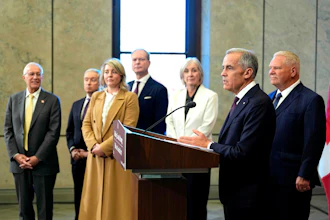
Industry Minister Mélanie Joly put the government's ambition plainly:
"I'm convinced that we will be able to show the world that Canada will win this trade war."